The Ingredient List Is Not a Beauty Scorecard
The ingredient list is not a beauty scorecard: learn how label rules, product purpose and formula context help you compare cosmetics without tallying names.
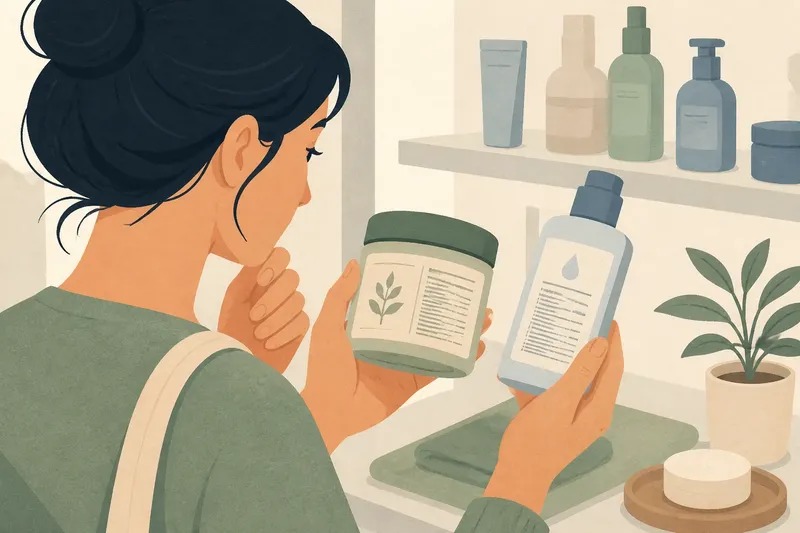
Two moisturisers sit side by side on a bathroom shelf, and one ingredient list looks friendlier at a glance. The ingredient list is not a beauty scorecard: counting familiar names against unfamiliar ones cannot tell you which finished product will suit your skin or routine. It is a useful clue, not a verdict.
Imagine a clearly hypothetical situation: Mara wants a moisturiser for skin that feels tight after washing. She compares two packages in a shop, spots a botanical extract near the top of one list and a technical-sounding ingredient on the other, and nearly chooses by tally. Instead, she checks what the lists can actually tell her, then compares each product’s format, directions and intended use. That gives her a more grounded basis for choosing, without pretending a label can predict her individual response.
What can an ingredient list tell you?
It identifies the ingredients declared for the product under the labelling rules that apply in its market. That can help you check for an ingredient you prefer to avoid, compare products when you already know of a personal sensitivity, or recognise familiar components such as glycerin, oils, waxes and preservatives.
Ingredient order can offer a limited clue, but it is not a ranking of importance or quality. For example, under the European Union’s cosmetics labelling rules, ingredients present above one per cent are generally listed in descending order by weight; ingredients at one per cent or less may be listed in a different order after those above that level. This is a jurisdiction-specific example, not a universal rule: conventions vary by market, and a small change in position does not establish a meaningful difference in how products perform.
Nor does the list explain the whole formula. It does not show how ingredients are processed, how they interact, or how the product feels when spread on skin. The same ingredient can serve different purposes in different formulas; its presence alone cannot tell you whether the finished product is suitable for you.
Why does a good-versus-bad tally mislead?
A tally treats ingredient names as if each had one fixed effect, independent of context. An ingredient’s role depends on its amount, the other ingredients around it, the product’s format and how it is meant to be used. A name that sounds technical is not automatically a red flag, just as a plant-derived name is not automatically a sign of gentleness.
The tally also ignores what the product is designed to do. A cleanser is made to be rinsed away; a moisturiser is intended to remain on the skin. Comparing their lists as though they were competing versions of the same thing misses the basic difference in use. Even two moisturisers may suit different textures, application habits or preferences.
There is another trap: treating every ingredient that sounds desirable as a bonus point. A product can include a familiar humectant or botanical extract without that one item defining the whole experience. The complete formula, the amount used and how it fits your routine matter more than collecting fashionable names.
How should you compare two products?
Start by matching the products’ purpose, then use the label to answer a question that matters to you. For each point below, check the stated detail and let the result guide your next action:
- Product type: Check that both products are intended for the same job. If one is a cleanser and the other a leave-on moisturiser, compare each with a product of its own type instead; if both are moisturisers, continue.
- Directions: Check whether each product is rinsed off or left on and how the package says to apply it. If the instructions fit the moment you plan to use it, keep it in consideration; if they do not, set it aside or choose a format that fits better.
- Known personal concern: Check the full ingredient list for an ingredient you already know you prefer to avoid. If it appears, choose another option or seek qualified advice if the concern relates to a suspected allergy; if it does not, remember that the list cannot rule out every possible reaction.
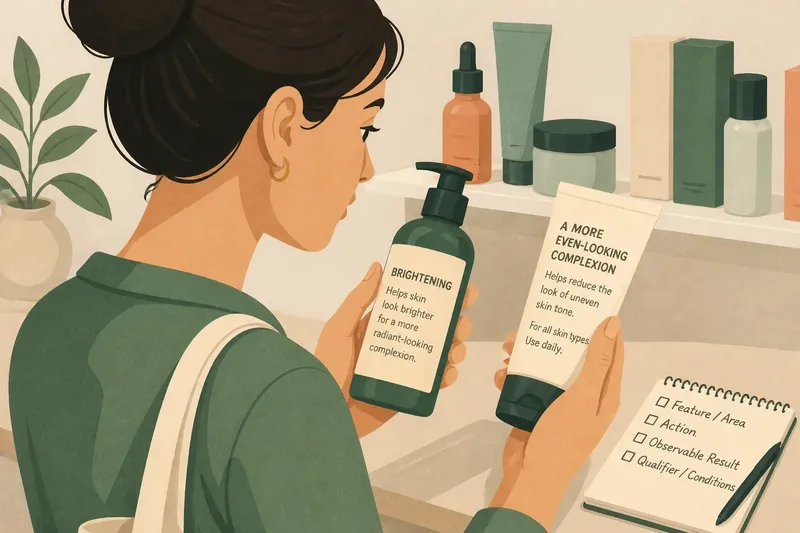
- Claims: Check what the package actually says and whether the claim is relevant to your reason for shopping. If it answers a practical question, use it as one piece of information; if it is vague or unrelated, do not treat it as evidence that the product is the better choice.
- Format: Check whether the product is a lotion, cream, balm or another format. If that texture seems compatible with how you like to apply moisturiser, keep it on your shortlist; if not, choose a format you are more likely to use.
- Routine fit: Check when and where you would use the product, along with its directions. If it fits that routine, it may be a practical option to consider; if you cannot see yourself using it as directed, compare a more convenient alternative.
Say Mara’s starting point is two leave-on moisturisers: one is a balm with a botanical extract high on its list, and the other is a lotion with a name she does not recognise. She checks both directions and sees that each is meant to remain on the skin; she also checks for a personal trigger she already knows and finds it on neither list. She prefers a lighter texture after washing, so she chooses the lotion as the more plausible fit for her habit, while recognising that its unfamiliar ingredient name does not prove anything about performance or comfort. The observable question is whether she finds it comfortable and keeps using it; the label cannot answer that in advance.
It is not worth searching every unfamiliar name online and assigning it a moral grade. That can turn a quick label check into a trail of alarming snippets stripped of context. Focus on a concrete concern, such as a known personal trigger, and set aside the rest unless you have a reason to investigate further.
Which ingredient-list questions are worth asking?
Does an ingredient near the top mean the product works better?
Not by itself. Its position may offer a broad clue about relative amount under the applicable listing rules, but it does not establish how the complete formula performs or whether it suits your skin.
Are ingredients with long names automatically harsh?
No. Ingredient names follow naming conventions and can look unfamiliar even when they serve ordinary formulation purposes. A name alone does not tell you how the finished product feels or behaves.
Does a natural-sounding list mean a gentler product?
No. “Natural-sounding” describes an impression of the names, not a reliable measure of how a finished formula will suit an individual. Consider your own known sensitivities and the product’s intended use instead.
Can the list identify a personal sensitivity?
It can help you check whether a known ingredient is present, but it cannot diagnose what caused a reaction. If you have persistent or concerning symptoms, seek advice from a qualified health professional.
How should you use the list at the shelf?
By the time Mara reaches the checkout, she has not scored either moisturiser. She has established that both are the right kind of product, checked details relevant to her, and chosen the one whose format and directions fit her habits. That is a better use of packaging than treating it as a league table.
The ingredient list is not a beauty scorecard; it is one piece of product information. Use it to answer a specific question, then consider the product’s purpose, format and your own experience—the context the label cannot supply. If a labelling convention or use direction is unclear, check the rules that apply in your market and follow the manufacturer’s instructions.