When the Compact Mirror Became a Keepsake
Compact mirror history reveals how a practical pocket mirror can also become a keepsake, with design, inscriptions and wear offering clues to its appeal.
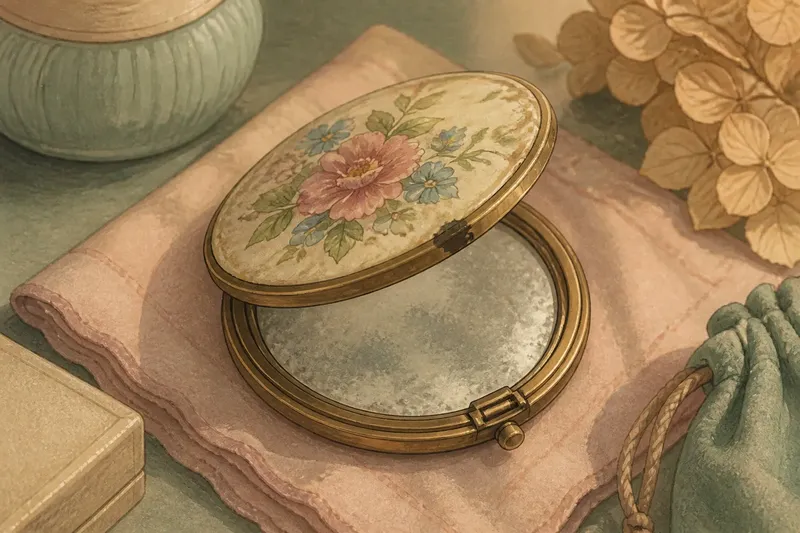
A compact mirror can hold a lipstick smudge, a faded inscription and a small, familiar click when its clasp closes. Compact mirror history is not one neat march from grooming tool to treasured heirloom; the same object can be practical, decorative and personal at once.
What does compact mirror history tell us?
Portable mirrors have taken different forms, and a compact is best understood as one format among them: a reflective surface protected by a case, often with a hinge. Without a dated object, maker’s record or reliable provenance, a particular compact’s age and origin should remain open questions.
The practical appeal is easy to see without making a sweeping historical claim. A small, closable mirror can travel in a bag and be opened when needed, while its case protects the glass from rubbing against other belongings.
How did a compact become an accessory?
A case turns the mirror’s outside into part of the object’s design. Materials and finishes can make a compact look restrained or ornate: a plain metal surface, coloured enamel or a printed motif each gives the lid a different character.
Small details matter, too. A hinge, clasp and surface pattern can be considered as carefully as the mirror itself, although appearance alone cannot establish when or where a compact was made.
Why can a compact become a keepsake?
Personal meaning often comes from a specific connection: a gift, a journey, an inscription or simply years of familiar use. A place name or emblem may suggest a souvenir, but it does not prove where the object travelled or who owned it.
Wear can make the object feel familiar, but a scratch or softened finish is not proof of age. It may reflect use, storage or damage; treat it as a visible feature rather than a complete history.
Which materials and formats should you recognise?
Metal, enamel, plastic and decorated glass can all appear in compact cases. The material affects the look and feel, while the condition of its surface can matter more than the material’s name if you are choosing an object to carry or display.
Some compacts were made to hold powder or an applicator; others are mirror cases without a cosmetic compartment. Look inside rather than assuming a case once held makeup. Residue, an insert or a puff may offer clues, but none alone confirms the original contents.
What should you check before choosing a vintage compact?
- Check the mirror: If clouding, scratches or spots interrupt the reflection, decide whether you want a usable mirror; if not, consider it for display or pass it by.
- Check the hinge gently: If it moves without catching, decide whether the case suits regular opening; if it feels strained, avoid forcing it and choose another compact for frequent use.
- Check the clasp: If it closes securely without pressure, decide whether you would carry it; if it will not stay shut, keep it for display or look for a sounder case.
- Check the inside: If you see residue, an insert or an applicator, decide whether that detail matters to your interest; if the interior is empty, assess the compact as a mirror case rather than assuming it held cosmetics.
- Check the finish: If you see chips, dents or worn plating, decide whether the visible condition still appeals; if you want an undamaged surface, choose a better-preserved example.
- Check for marks or inscriptions: If a name or maker’s mark is present, treat it as a clue and seek corroboration before making claims about origin; if there is no mark, judge the object by its design and condition instead.
- Check your purpose: If you want a mirror to carry, prioritise a clear reflection and a working clasp; if you want a decorative keepsake, decide whether the design and personal associations outweigh functional wear.
Imagine you find a floral enamel compact at a charity shop. Its mirror is cloudy, the clasp feels stiff and the lid has a small chip; you want a decorative object, not a mirror for your handbag. You inspect the enamel and find that the flower remains clear, then leave the clasp alone rather than forcing it. The result is a deliberate choice to consider it for display, while accepting that its condition and unknown history do not make it suitable for regular use or establish its age.
What questions help you judge a compact’s appeal?
Can you still use a vintage compact mirror?
That depends on its present condition. Check whether the reflection is clear and the clasp closes gently; if either is unsuitable, treat it as a display object instead.
Does a maker’s mark prove a compact is valuable?
No. A mark can provide a clue about a maker or origin, but it does not establish rarity, provenance or value by itself.
How should you care for a decorative compact?
Keep it dry and store it so the case does not rub against hard objects. Use a soft cloth and avoid abrasive cleaners, especially when the finish or materials are uncertain; ask a qualified conservator for advice if the object is delicate or significant.
Why do people collect compact mirrors?
Some are drawn to a particular material, motif or design, while others value an inscription or personal association. The appeal need not depend on rarity or a confirmed story.
What is not worth the effort?
Trying to remove every mark can do more harm than good. Abrasive polishing may damage a finish or printed decoration, and clouding within a mirror may not respond to cleaning its surface.
Nor does every compact need to be made functional. If its design is what you value, leaving a worn case as it is may be wiser than attempting a repair without knowing how its materials will respond.
Compact mirror history is most useful as a way to ask better questions, not to assign an unverified date or story. Look closely at the mirror, case, marks and condition, then decide whether you want a working object, a decorative piece or a keepsake whose associations are your own.